
Squamous cell carcinoma care at Advanced Dermatology, P.C.
Squamous cell carcinoma (SCC) is one of the most common forms of skin cancer, and early diagnosis plays a critical role in successful treatment.
At Advanced Dermatology, P.C., our board-certified dermatologists provide comprehensive diagnosis and treatment for squamous cell carcinoma across New York, New Jersey, and Connecticut, combining clinical expertise with personalized care plans.
While many squamous cell carcinomas grow slowly and are highly treatable when caught early, some cases can become aggressive if left untreated. Our dermatology teams focus on early detection, precise diagnosis, and evidence-based treatment to protect both your skin health and long-term well-being.
What is squamous cell carcinoma?
Squamous cell carcinoma is a cancerous skin condition that develops in the squamous cells, which make up most of the outer layer of the skin (the epidermis). It most often appears on areas of the body that receive long-term sun exposure, such as the face, ears, lips, scalp, neck, arms, and hands.
Although SCC is not usually life-threatening, it can grow deeper into the skin and surrounding tissue if not treated promptly, making early evaluation essential.
How SCC develops in the skin
SCC typically develops after years of cumulative ultraviolet (UV) exposure. UV radiation damages the DNA in skin cells, and over time, this damage can lead to abnormal cell growth. These cancerous cells multiply uncontrollably, forming lesions that may enlarge, crust, bleed, or fail to heal.
Cutaneous squamous cell carcinoma explained
Cutaneous squamous cell carcinoma refers specifically to SCC that develops on the skin, as opposed to SCCs that arise in other parts of the body. It is the second most common type of skin cancer in the United States.
According to published data in the National Library of Medicine, the estimated lifetime risk of developing squamous cell carcinoma is approximately 9–14% in men and 4–9% in women, highlighting how common this condition is, particularly in sun-exposed populations.

What Causes Squamous Cell Carcinoma?
Most squamous cell carcinomas are caused by long-term damage to the skin from ultraviolet radiation, but several factors can contribute to its development.
UV damage and long-term sun exposure
Chronic sun exposure is the leading cause of SCC. Tumors most often develop in areas that receive frequent or intense sunlight, including the face, ears, lower lip, scalp, shoulders, arms, and hands. Tanning beds and artificial UV sources also significantly increase risk.
HPV, tanning beds, and environmental factors
In some cases, squamous cell carcinoma may develop in areas of previous skin injury, such as burns, scars, chronic wounds, or sites exposed to radiation or certain chemicals like arsenic.
Certain strains of human papillomavirus (HPV) have also been associated with SCC, particularly in specific anatomical areas.
Who is At Risk?
Anyone can develop squamous cell carcinoma, but certain factors significantly increase the risk.
Sun exposure
People who spend a great deal of time outdoors for work or recreation are at higher risk due to prolonged exposure to UV. Living in regions with intense sunlight further increases cumulative skin damage over time.
Skin type
Individuals with fair skin, light hair, and light-colored eyes are at the highest risk. However, SCC can occur in all skin tones. In people with darker skin, SCC often develops in areas of chronic inflammation, scars, or previous injuries rather than sun-exposed skin.
Previous skin cancer
A history of any skin cancer increases the likelihood of developing squamous cell carcinoma again. Regular skin exams are essential for these patients.
Reduced immunity
People with weakened immune systems, including those undergoing chemotherapy, organ transplant recipients, or individuals with immune-related conditions, are at increased risk for SCC and may experience more aggressive disease.
Age, genetics, and lifestyle risks
SCC is more common with increasing age due to cumulative sun exposure over time. Genetic predisposition, smoking, and exposure to certain chemicals may also elevate risk.

Squamous cell carcinoma symptoms: what to look for
Recognizing SCC early can prevent more extensive treatment and reduce the risk of complications.
What does squamous cell carcinoma look like?
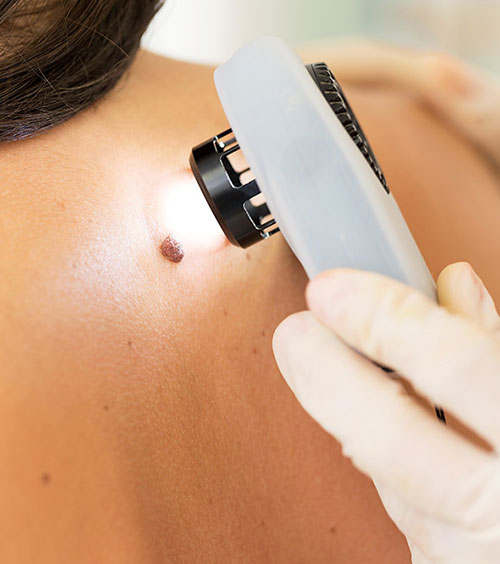
SCC often appears as a firm, red bump, a rough or scaly patch, a crusted lesion, or a sore that does not heal. Lesions may bleed easily, feel tender, or develop a raised border with a central crust.
Early symptoms of SCC
Early signs may include persistent rough patches, thickened skin, or sores that repeatedly scab over. Precancerous lesions known as actinic keratoses, which appear as red, scaly patches, can sometimes progress to SCC.
Warning signs SCC may be spreading
More advanced SCC may grow rapidly, ulcerate, or invade deeper tissues. High-risk tumors are more commonly found on the lip, ear, or nose, and in individuals with suppressed immune systems. Any rapidly changing or painful lesion should be evaluated promptly.
How squamous cell carcinoma is diagnosed
Accurate diagnosis is essential for determining the most effective treatment plan.
Physical exam and dermoscopy
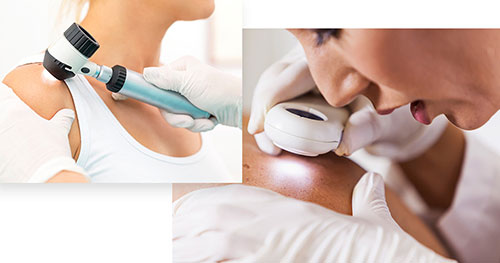
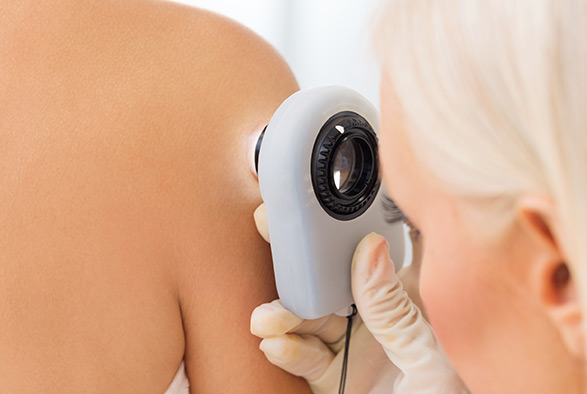
A board-certified dermatologist will begin with a thorough skin examination, often using dermoscopy to evaluate suspicious lesions more closely and assess features not visible to the naked eye.
Biopsy and pathology review
If SCC is suspected, a skin biopsy is performed. A pathologist examines the tissue sample to confirm the diagnosis and determine tumor characteristics that may influence treatment.
SCC stages and prognosis
Most squamous cell carcinomas are diagnosed at an early stage and have an excellent prognosis when treated promptly. Staging depends on tumor size, depth, location, and evidence of spread. Your dermatologist will explain staging and prognosis based on your individual diagnosis.

Treatment options for squamous cell carcinoma
There is no single best treatment for every SCC. Treatment is tailored based on tumor location, size, depth, recurrence risk, and patient health.
Current methods of treating SCCs
Treatment options may include curettage and electrodessication, cryosurgery, topical or injectable chemotherapy, excisional surgery, Mohs micrographic surgery, radiation therapy, laser therapy, or photodynamic therapy.
Surgical excision and SCC removal
Standard surgical excision involves removing the tumor along with a margin of healthy tissue. This approach is effective for many low- to moderate-risk SCCs.
Mohs surgery for high-risk SCC
Mohs micrographic surgery offers the highest cure rates for high-risk or recurrent SCCs, particularly on the face, ears, lips, and other cosmetically sensitive areas. It allows precise removal of cancerous tissue while preserving healthy skin.
Radiation and advanced therapies
Radiation therapy may be recommended when surgery is not appropriate or as an adjunct treatment. Advanced therapies may also be considered for more complex cases.
One option offered in select cases is superficial radiation therapy (SRT).
SRT is a non-invasive form of radiation treatment that targets skin cancers at shallow depths, making it well-suited for certain squamous cell carcinomas on the skin.
This approach may be considered for patients who are not ideal surgical candidates or for tumors in cosmetically or functionally sensitive areas.
SRT is also commonly used in dermatology to help reduce the risk of recurrence following removal of specific lesions and is offered by Advanced Dermatology, P.C., for both skin cancer and keloid treatment when clinically appropriate.
Your dermatologist will determine whether SRT is appropriate for your personalized SCC treatment plan based on tumor characteristics, location, and overall health.
Follow-up care and recurrence management
Regular follow-up visits are essential after SCC treatment. Your dermatologist will monitor for recurrence and screen for new skin cancers, helping to protect long-term skin health.
Prevention and reducing your risk
While not all SCCs can be prevented, proactive steps can significantly lower risk.
Daily sun protection and skin care habits
Using broad-spectrum sunscreen daily, wearing protective clothing, avoiding peak sun hours, and skipping tanning beds all reduce UV-related skin damage.
How to prevent SCC recurrence
Patients with a history of SCC should perform regular self-exams and attend routine dermatology visits to catch new lesions early.
When you should see a skin cancer specialist
Any non-healing sore, rapidly growing lesion, or changing spot should be evaluated by a dermatologist promptly, especially in high-risk individuals. If you’re experiencing symptoms of SCC, we encourage you to book an appointment for further evaluation now.
Why choose Advanced Dermatology, P.C. for SCC care?
Advanced Dermatology, P.C. provides comprehensive skin cancer care rooted in clinical excellence and patient-focused treatment.
Board-certified dermatologists and skin cancer specialists
Our dermatologists have extensive experience diagnosing and treating squamous cell carcinoma across all risk levels.
Leading technology for SCC diagnosis and removal
We use advanced diagnostic tools and surgical techniques, including Mohs surgery, to deliver precise and effective care.
Customized treatment plans for all SCC stages
Every treatment plan is tailored to the individual, considering medical history, tumor characteristics, and personal preferences.
Squamous cell carcinoma FAQs
Is squamous cell carcinoma dangerous or life-threatening?
Most SCCs are not life-threatening when detected early, but untreated tumors can become aggressive and cause significant tissue damage.
How fast does squamous cell carcinoma grow?
Many SCCs grow slowly, but some can grow more rapidly, particularly in high-risk locations or immunocompromised patients.
Is squamous cell carcinoma curable?
Yes. When diagnosed early, SCC is highly curable with appropriate treatment.
Does SCC always require surgery?
Not always. Treatment depends on tumor size, location, and risk factors. Some cases may be treated with non-surgical options.
Can SCC return after treatment?
Yes. Patients who have had SCC are at higher risk for recurrence and developing new skin cancers, making follow-up care necessary.
What areas of the body are most at risk for SCC?
Sun-exposed areas such as the face, ears, lips, scalp, neck, arms, and hands are most commonly affected.
How can I lower my risk of developing SCC?
Consistent sun protection, regular skin exams, and early evaluation of suspicious lesions help reduce risk.
Do you accept insurance for the diagnosis and treatment of squamous cell carcinoma?
Advanced Dermatology, P.C., accepts most major insurance plans. Coverage for squamous cell carcinoma diagnosis and treatment may vary depending on your specific plan, the type of visit, and the treatment recommended. Our team can help answer insurance-related questions and guide you through the next steps before your appointment.