
Irregular Brown Spots: What They Mean, Causes and When To See a Dermatologist
What Are Irregular Brown Spots?
Irregular brown spots can describe a wide variety of dermatological conditions, each with different causes and degrees of medical seriousness. For this reason, it is always recommended to have any new or changing spots evaluated by a board-certified dermatologist, as they can represent everything from cosmetic sun damage to a more concerning condition like melanoma.
While it is normal to be concerned about skin changes, especially those with an irregular appearance, a professional diagnosis is the only way to confirm the spot’s origin and create a proper treatment plan.
Common Causes of Irregular Brown Spots
Irregular brown spots can appear for many reasons. The most frequent causes include:
Sun exposure
Prolonged UV exposure is a leading cause of skin discoloration. It can lead to:
Skin cancers: Melanoma, a serious form of skin cancer, often presents as a new or changing irregular brown spot.
Solar lentigines (sunspots/age spots): Flat, tan to dark brown spots that appear on sun-exposed areas like the face, hands and shoulders.
Freckles (Ephelides): Small, light-brown spots often influenced by genetics but worsened by UV exposure.
Hormonal changes
Shifts in hormone levels can affect melanin production and skin sensitivity to sunlight:
- Melasma: Irregular grayish-brown patches, often called “the mask of pregnancy,” triggered by pregnancy, hormonal birth control or other hormone changes.
Inflammation
Skin injuries or irritation can cause overproduction of melanin, resulting in:
- Post-Inflammatory Hyperpigmentation (PIH): Common after acne, eczema, burns, rashes, insect bites or cosmetic procedures. Darker skin tones are more prone due to higher melanocyte activity.
Genetics
Inherited traits can influence pigmentation patterns and susceptibility to certain spots:
Lentigo simplex: Flat, brown spots resembling moles that are often present at birth but can develop in early childhood. tones are more susceptible to PIH because their melanocytes are more reactive.
Freckles (Ephelides): These small, flat brown spots are exacerbated by sun exposure but are also a genetic trait.
Café-au-lait spots: Flat, light brown patches on the skin.
Becker’s nevus: Thought to be an inherited condition, this is a pigmented lesion with a significant overgrowth of hair affecting primarily males.
Aging
With age, melanocytes can cluster, creating concentrated dark spots. Common age-related growths include:
- Seborrheic Keratoses: Benign, waxy skin growths can appear tan, brown or black, and are linked to both aging and genetics. Seborrheic keratoses might develop within a solar lentigo, according to medical science compiled by DermNet.
Other Factors
Certain medications, medical conditions or nutrient deficiencies can also contribute to pigmentation changes:
- Fungal infections: Some fungal infections, such as tinea infections, can cause pigmentation changes in the skin.
- Diabetes: Certain changes in skin pigmentation have been linked to diabetes.
Vitamin deficiencies: In some cases, a deficiency in certain vitamins, like B12 or folic
Types of Brown Spots: A Practical Differential List
Identifying the type of brown spot is important for proper treatment and early detection of serious conditions. Common types include:
- Freckles (ephelides)
Small, flat, light-brown macules worsened by UV exposure, especially in fair skin - Sunspots
Larger, well-defined spots from cumulative sun damage, often on the face, hands and forearms after age 40 - Melasma
Irregular, blotchy patches linked to hormones and sun exposure, commonly on cheeks and forehead - Moles (melanocytic nevi)
Benign clusters of pigmented cells, flat or raised - Seborrheic keratosis
Waxy, “stuck-on” brown growths, common in older adults - Melanoma
Must be ruled out for any spot that is asymmetric, has irregular borders, uneven color or exceeds 6mm in diameter. Dermatologist evaluation is critical for suspicious lesions. - Post-Inflammatory Hyperpigmentation (PIH)
Darkened areas following skin injury or inflammation.
- Café-au-lait Spots, Lentigo Simplex, Becker’s Nevus:
Typically inherited pigmentation patterns - Moles (melanocytic nevi)
Benign clusters of pigmented cells, flat or raised.
What Irregular Brown Spots Look Like and Where They Commonly Appear
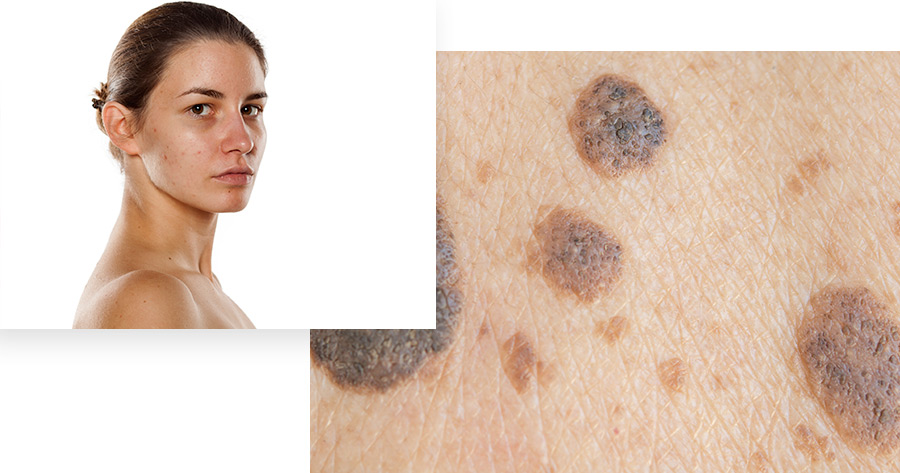
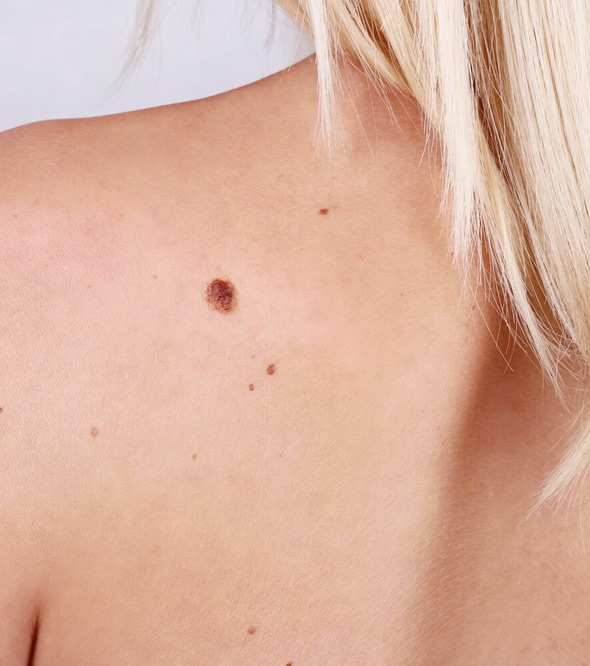
Irregular brown spots vary in appearance depending on their cause, but they typically share recognizable visual patterns. They may be flat or raised, range in color from light tan to deep brown or near black and vary in size from a few millimeters to several centimeters.
Shape is often the key differentiator. Benign spots tend to be round and symmetrical, while irregular spots may have jagged, undefined or asymmetric borders.
- Flat spots, such as solar lentigines and melasma, sit flush with the skin and are most associated with UV damage or hormonal shifts.
- Raised spots, including seborrheic keratoses and certain moles, have a textured or waxy surface that can feel rough or bumpy to the touch. Color variation within a single lesion, such as patches of tan, brown and dark pigment coexisting, is a notable warning sign.
Irregular brown spots most commonly appear on the face (cheeks, forehead and upper lip), hands and forearms, shoulders and upper back, which are all areas with the highest lifetime sun exposure. Spots that emerge in sun-protected areas or change rapidly warrant immediate dermatological attention.
Prevention Tips
Preventing dark spots on the skin involves a combination of protective measures, lifestyle choices and skincare practices.
While complete prevention might not be possible in all cases, especially if genetics are involved, you can reduce your risk of developing dark spots on the skin by adopting the following habits:
- Applying sunscreen with broad-spectrum protection (against UVA and UVB rays) and high SPF daily, even on cloudy days.
- Wearing protective clothing, such as wide-brimmed hats, sunglasses and long sleeves, to shield your skin from direct sun exposure.
- Limiting your time in direct sunlight, particularly in a high-altitude or reflective surface environment.
- Avoiding tanning beds.
- Maintaining a healthy diet rich in antioxidants, vitamins and minerals to support overall skin health.
- Staying hydrated by drinking plenty of water.
- Using a gentle cleanser and avoiding harsh scrubbing or abrasive skincare products that might irritate the skin.
- Incorporating exfoliation into your routine to remove dead skin cells and promote even skin tone.
- Scheduling regular visits with a dermatologist to monitor your skin’s health and address skin changes early.
Remember that prevention is vital, especially since exposure to sunlight is a significant factor in developing dark spots.
When To See A Dermatologist: Red Flags You Should Not Ignore
You should see a dermatologist immediately if a brown spot is asymmetric, has an irregular border, shows multiple colors, measures larger than 6mm or has changed in any way over time. These five criteria form the ABCDE method are the most reliable self-screening tool for identifying suspicious skin lesions that may require professional evaluation.
The ABCDE Method breaks down as follows:
- Asymmetry means one half does not mirror the other.
- Border refers to ragged, notched or blurred edges.
- Color flags uneven distribution of tan, brown, black, red or white within a single spot.
- Diameter greater than 6mm (roughly the size of a pencil eraser) warrants concern.
- Evolution refers to any spot that grows, changes shape, shifts color or develops new symptoms, and is perhaps the most critical warning sign of all.
Additional red flags include spontaneous bleeding, itching, crusting, sudden onset in a previously clear area or a lesion that fails to heal. These symptoms can indicate malignant transformation even when ABCDE criteria appear borderline.
Early detection matters enormously. When melanoma is caught at stage one, the five-year survival rate is just under 99%, according to data from the American Cancer Society. The percentage declines significantly with each advanced stage, making prompt dermatological evaluation a potentially life-saving decision.
A Decision Pathway: Appearance + Location + Timeline → Next Step
At Advanced Dermatology, P.C., we believe every patient deserves a clear, structured way to assess their skin concerns. That is why we use a three-factor decision pathway built around appearance, location and timeline to guide the appropriate next step: watchful waiting, a routine dermatology visit or prompt and urgent evaluation.
When appearance, location and timeline are all low-risk, watchful waiting with monthly self-checks is reasonable. Low-risk changes include when a small, symmetrical, evenly colored spot in a sun-exposed area has remained stable for years. Document it with photos and monitor for any changes.
If a spot is new, slightly irregular or located in an area of repeated sun exposure, such as the face, hands or upper back, we recommend scheduling a routine skin cancer screening. Early professional assessment prevents uncertainty from becoming a missed diagnosis.
Prompt or urgent evaluation is warranted when any ABCDE warning sign is present, the spot bleeds or fails to heal or a lesion has changed noticeably within weeks. In these cases, do not wait for an annual appointment.
Our team at Advanced Dermatology, P.C. is here to help you navigate every step, because no skin concern is too small to take seriously.
Treatment Options
The treatment to remove dark spots on the skin depends on the underlying cause and the specific type of dark spots.
Here are some common treatments to address dark spots:
Topical treatments
- Hydroquinone is a common skin-lightening agent that can help fade dark spots over time. It works by inhibiting melanin production.
- Prescription retinoids like tretinoin can help exfoliate the skin and promote the growth of new, evenly pigmented skin cells.
- Topical vitamin C serums can help brighten the skin and reduce the appearance of dark spots.
- Like hydroquinone, kojic acid can inhibit melanin production and lighten dark spots.
Chemical peels
Chemical peels are exfoliating treatments, typically using a glycolic, salicylic or phenol acid solution. This procedure can help reduce the appearance of dark spots and promote the growth of new skin cells.
Laser therapy
Laser skin treatments can target and break down pigmented cells in the skin, reducing the appearance of dark spots. Different types of lasers, such as fractional or intense pulsed light (IPL), may be used depending on the specific condition.
Cryotherapy
Cryotherapy involves freezing the dark spots with liquid nitrogen, causing the spots to peel off as the skin heals.
Prescription medications
For specific conditions like melasma, your dermatologist might prescribe medications like topical corticosteroids or combination creams to help lighten dark spots.
It’s important to note that the effectiveness of treatments can vary based on factors like the type of dark spots, their severity and an individual’s skin type. Consulting a dermatologist is crucial to determining your condition’s most appropriate treatment.
FAQs About Irregular Brown Spots
At Advanced Dermatology, P.C., we hear the following questions every day, and we want you to have clear, honest answers.
Can irregular brown spots be cancer?
Yes. While most brown spots are benign, irregular spots displaying asymmetry, uneven color or rapid change can be early signs of melanoma. Any spot that concerns you should be evaluated by a dermatologist promptly.
What is the difference between age spots and melanoma?
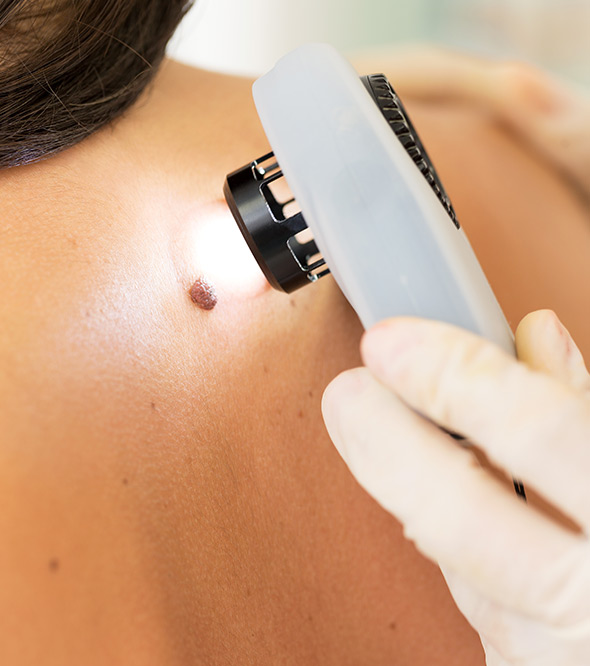
Age spots (solar lentigines) are flat, evenly pigmented and stable over time. Melanoma is typically asymmetric, multi-toned and evolving. When in doubt, our team at Advanced Dermatology, P.C. can distinguish between the two with a thorough clinical exam or Dermoscopy.
Do brown spots go away on their own?
Some freckles fade with reduced sun exposure. However, most brown spots, like solar lentigines and seborrheic keratoses, are permanent without treatment.
What is the fastest way to fade dark spots?
Clinically proven options include topical retinoids, hydroquinone, chemical peels and laser treatments. Over-the-counter brightening products can help, but prescription-strength treatments deliver faster, more reliable results.
Should I pick or scrub a raised brown spot?
Never. Picking or scrubbing can cause infection and scarring. If the lesion is atypical, worrying it might delay a critical diagnosis. Always let a professional evaluate raised spots first.
When should I worry about a brown spot?
In general, you should be concerned about a brown spot and see a dermatologist if it is new, changing or exhibits any unusual characteristics. While most brown spots, like freckles or age spots, are harmless, some can be signs of more serious skin conditions, including melanoma.
Because early detection is crucial for successful treatment, particularly for melanoma, it is important to be vigilant and regularly examine your skin for changes.
A simple strategy for assessing potentially concerning skin changes is the ABCDE method. This shortcut was structured to remind you of the characteristics to note when checking your skin. These characteristics include the following:
- Asymmetry: Asymmetrical spots merit examination.
- Border irregularity: Ragged edges; the borders aren’t smooth.
- Color changes: The spot has color variations or changes color.
- Diameter: Pencil eraser-sized (or larger) skin growths should be checked.
- Evolving in shape, size or color
Can irregular brown spots turn into skin cancer?
Yes, some irregular brown spots can turn into skin cancer, while others may be cancer from the start.
Not all brown spots are cancerous, but the key is to monitor any spot that is new or changing and to have it examined by a dermatologist, especially if it has irregular characteristics. The deadliest form of skin cancer, melanoma, often presents as an irregular brown or black spot.
What treatments can fade dark spots?
At Advanced Dermatology, P.C., our experts offer a wide array of advanced dermatological treatments to effectively fade dark spots and revitalize your skin.
Whether your dark spots are the result of sun damage, hormonal changes or acne scarring, we can provide a customized solution for your needs:
- Microdermabrasion
This minimally abrasive treatment exfoliates the skin, helping to smooth mild skin blemishes and improve overall tone. - Laser and Intense Pulsed Light (IPL) Therapy
These treatments use targeted light energy to break down melanin in dark spots, helping to fade sunspots, melasma and other forms of hyperpigmentation. - Chemical peels
We offer a variety of medical-grade chemical peels that use solutions to exfoliate the top layers of skin, promoting new cell turnover and revealing a brighter, more even complexion. - Microneedling
By creating controlled micro-injuries in the skin, this procedure stimulates collagen production and improves overall skin texture, which can reduce the appearance of dark spots and acne scars. - Topical prescription medications
A dermatologist can prescribe potent topical medications, including retinoids and other bleaching creams, to help lighten persistent dark spots. - Cryotherapy
For certain types of dark spots, a dermatologist may use liquid nitrogen to freeze and destroy excess pigment.
How can I tell if an irregular brown spot is cancerous?
Look for the following characteristics in any mole or spot:
- Unevenness: The halves of the spot don’t mirror each other.
- Irregular Edges: The perimeter of the growth is jagged, scalloped or blurred.
- Variable Tones: The lesion features inconsistent coloring, with various shades or spots of different colors.
- Size: A spot larger than a standard pencil eraser should be examined.
- Transformation: The growth is noticeably changing in its appearance, including size, shape or shade.
Do irregular brown spots always require medical treatment?
Medical treatment is not always required for irregular brown spots, but a thorough assessment by a qualified dermatologist is essential to determine if treatment is necessary.
Many brown spots, such as sunspots and freckles, are benign, but only an expert can distinguish them from more serious conditions like melanoma, which can be life-threatening if not caught and treated early. For this reason, we emphasize that any new or changing spot with irregular features should be evaluated as soon as possible.
Schedule a Skin Spot Evaluation With Advanced Dermatology, P.C.
If you have noticed a brown spot that looks irregular, has changed or simply does not seem right, do not wait. Early evaluation is the single most effective step you can take toward protecting your skin health.
The team at Advanced Dermatology, P.C. is ready to provide a thorough, expert assessment and guide you toward the right treatment plan. Schedule your skin spot evaluation today.developing dark spots.