
Dupuytren’s Contracture: Symptoms, Causes & Treatment
What is Dupuytren’s contracture?
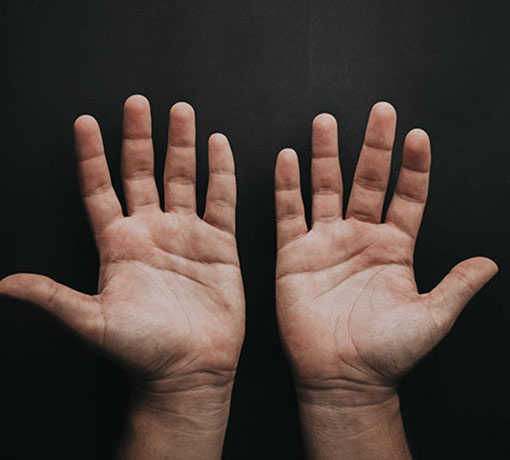
Dupuytren’s contracture is a condition that affects approximately 1 in 20 people in the United States. It is characterized by the atypical thickening of the skin on the palm extending from the base of the fingers. Over time, the fingers proximate to the thickened skin begin to contract, either pulling laterally or curling downward.
This progressive condition typically begins with the formation of firm, tender, or painless lumps beneath the skin of the palm. These lumps can develop into thick, fibrous cords that extend into one or more fingers, leading to malformations that prevent basic hand functions, like gripping objects or laying the hand flat.
Signs and symptoms
The development of Dupuytren’s contracture is a gradual process that can unfold over years, making it easy to overlook in its early stages.
Symptoms of Dupuytren’s Contracture can vary in type and severity from person to person but often include the following:
- Firm lumps or nodules: One or more hard lumps appear in the palm, which can sometimes be tender but are often painless. These are the initial signs of the underlying tissue thickening.
- Puckered skin: The skin over the nodules may become dimpled or puckered as the thickened tissue adheres to the skin.
- Fibrous cords: The lumps extend into fibrous cords that run from the palm up into the fingers.
- Bent or crooked fingers: The cords tighten, pulling the affected fingers, most often the pinky, ring, and sometimes the middle finger, into a bent position towards the palm.
- Limited hand function: As the fingers become increasingly bent, patients experience difficulty with everyday activities, including gripping objects, shaking hands, and even placing their hands flat on a surface.
- Inability to flatten hand: One of the most common signs of progression is the hand contracture, or the inability to fully extend or flatten the hand on a table, a test your doctor may use to assess the condition’s severity.
Causes and risk factors
While the precise cause of Dupuytren’s contracture is not fully understood, research indicates that a combination of genetic and environmental factors plays a significant role. The condition is not caused by overuse or injury to the hand, but certain risk factors can increase your likelihood of developing it.
- Age: The condition most commonly affects individuals after the age of 50.
- Sex: Men are at a much higher risk of developing Dupuytren’s contracture than women. Symptoms in men may also be more severe and progress at a faster rate.
- Family history: The condition often runs in families, indicating a strong genetic predisposition.
- Diabetes: Individuals with diabetes have an increased risk of developing Dupuytren’s contracture.
- High blood pressure: Hypertension has been associated with Dupuytren’s contracture.
- Lifestyle factors: Heavy alcohol consumption has been associated with a higher risk of the condition.
- Occupation: Some studies have shown a potential link between Dupuytren’s contracture and workers who use vibrating tools, though this connection is not fully understood.
Diagnosis and staging
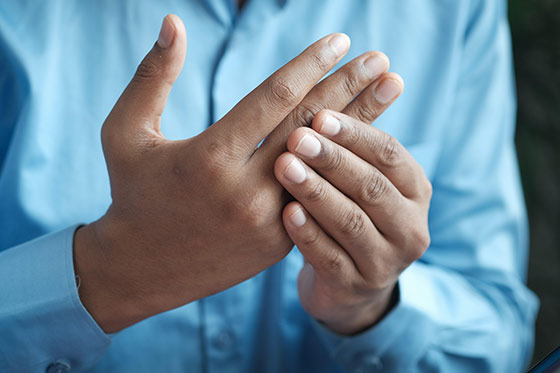
Diagnosing Dupuytren’s contracture involves a physical examination of your hands and fingers. Our board-certified dermatologists have extensive experience in recognizing the signs of this condition, from the initial subcutaneous nodules to the more advanced contractures.
We will assess the severity of your condition and develop a personalized treatment plan tailored to your specific needs. While there is currently no permanent cure for Dupuytren’s contracture, effective corrective treatments can significantly improve your quality of life.
Treatment options
The board-certified specialists at Advanced Dermatology, P.C. offer a range of effective interventions to manage Dupuytren’s contracture, a condition that cannot be cured but can be effectively treated.
For patients with palpable cords that restrict finger movement, both minimally invasive options and surgical procedures can provide significant relief and improved hand function. The right approach is determined based on the severity of the contracture and your specific needs.
- Steroid shot: A steroid injection can help reduce pain associated with a painful lump and may slow the progression of the condition in some cases.
- Collagenase injections: An enzyme is injected into the fibrous bands to degrade them, after which the surgeon can manipulate the fingers to release the contracture. This process can be repeated over several months for multiple affected joints.
- Needle aponeurotomy: This outpatient procedure involves inserting a needle into the fibrous bands to break them apart, allowing the physician to manually straighten the fingers.
- Surgical removal of the fibrous tissue: For more advanced cases, surgery may be necessary to remove the thickened tissue, which can provide longer-lasting results compared to minimally invasive options.
Ultimately, while there is no definitive cure for Dupuytren’s contracture, these interventions offer substantial relief and an improved quality of life.
Recovery and prognosis
For a steroid injection, recovery time is minimal. Patients should avoid strenuous activity with the treated hand for a few days. Aftercare is focused on managing any minor soreness at the injection site and monitoring for any ongoing symptoms.
An enzyme injection, on the other hand, involves a longer recovery process. Aftercare includes physical therapy and splinting to maintain the correction. The full recovery process could potentially take several months, especially if multiple joints require treatment.
For those undergoing needle aponeurotomy, the recovery is relatively quick, often involving splinting and exercises to maintain finger extension. Patients can typically return to normal activities within a couple of weeks.
Surgical removal of the fibrous tissue requires the longest and most intensive recovery. This procedure involves a period of physical or occupational therapy to restore hand function.
After surgery, patients can expect to have a splint for several weeks, followed by a guided rehabilitation program that could last for months, depending on the severity of the contracture.
FAQs about Dupuytren’s contracture
Can Dupuytren’s contracture be cured?
No, it is not possible to completely cure Dupuytren’s contracture. Since it is a chronic and often progressive disease, the primary goal of any intervention is to manage symptoms, reduce contractures, and improve hand function. However, the disease can recur, even after effective treatment.
A variety of treatment options can provide significant relief and improve hand function, including steroid injections, enzyme injections, needle aponeurotomy, or surgery.
The most effective treatment approach will depend on numerous factors, such as the severity and progression of the condition, which fingers are affected, and any other health conditions that might influence the procedure or recovery.
Our board-certified medical dermatologists for Dupuytren’s contracture can evaluate your individual circumstances to determine the best course of action.
Is Dupuytren’s contracture painful?
Dupuytren’s contracture is generally not a painful condition. While a firm lump, or nodule, in the palm may be sensitive to the touch, this discomfort often fades over time. The primary symptoms are functional limitations as the thickened tissue contracts, pulling one or more fingers toward the palm.
However, there can be exceptions to the general rule that Dupuytren’s is painless. Sometimes, particularly when the nodules first appear or if a lump is aggravated, it can be sore. In rare cases, if the contracture is severe enough to cause the bent fingers to dig into the palm, skin irritation or infection can occur, which may be painful.
Is Dupuytren’s Contracture related to other connective tissue diseases?
Yes. According to research from the Dupuytren Research Group, Dupuytren’s contracture is related to other connective tissue disorders, and these are often grouped into categories based on their commonalities. For example, Dupuytren’s contracture is part of a cluster of diseases called the Dupuytren Spectrum, which includes the following conditions:
- Ledderhose disease
- Peyronie disease
- Frozen shoulder
These conditions tend to cluster within individuals, indicating a common genetic origin. For instance, a person with a family history of Dupuytren’s disease is also more likely to develop Ledderhose disease, which affects the feet.
In addition to the diseases within the Dupuytren Spectrum, there are also “Dupuytren Overlap Diseases,” which include the following:
- Pulmonary fibrosis
- Scleroderma
- Cirrhosis of the liver
- Psoriasis
- Keloid
What’s the recovery time after treatment for Dupuytren’s Contracture?
At Advanced Dermatology, P.C., we want our patients to understand that the recovery time for Dupuytren’s contracture is dependent on both the specific treatment and the severity of the disease.
While minimally invasive procedures like steroid shots or needle aponeurotomy offer a relatively quick recovery, surgery requires a more intensive and prolonged rehabilitation period. Our team will tailor a recovery plan to your individual needs to ensure the best possible outcome.
The recovery timeline is also influenced by how far the disease has progressed; more advanced contractures often necessitate a longer and more involved recovery process.
Following a minimally invasive treatment, you can expect some minor swelling and soreness for a few days, but you can typically return to light activities relatively quickly. However, the surgical removal of fibrous tissue requires a more extensive recovery plan involving physical therapy, splinting, and a gradual return to normal hand function over several weeks or months.
Regardless of the treatment chosen, following aftercare instructions is essential for achieving the best possible outcome.