
Medically reviewed by Joshua Fox, MD, FAAD and Loretta Pratt, MD · September 2026
What are broken blood vessels?
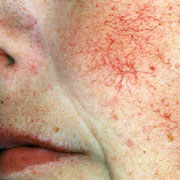
Have you ever wondered why your face is peppered with tiny red lines? These broken blood vessels are common, especially with age, and don’t typically go away on their own. However, a dermatologist can often treat them.
Known as telangiectasias, these tiny spider- or thread-like blood vessels can show up anywhere on the body but are especially common on the face. They can appear as small red, purple or pink lines and tend to cluster around the nose, cheeks and chin.
“Spider veins on the face don’t hurt, and they aren’t dangerous or life-threatening, but they certainly affect appearance and self-esteem. They can make the face appear slightly bruised and cause you to look older than you are,” explains Dr. Meryl Becker Joerg, MD, with Advanced Dermatology, P.C.
What causes broken blood vessels on the face?
Broken blood vessels on the face can develop for several reasons. Some risk factors are difficult to control, while others may be related to sun exposure, skin conditions or lifestyle factors.
Sun exposure and UV damage
Prolonged sun exposure can damage the skin and contribute to visible facial blood vessels. Protecting your skin from UV exposure with broad-spectrum sunscreen and other sun-protection measures may help reduce this risk.
Rosacea and skin conditions
Rosacea, a common skin condition, can cause persistent facial redness and visible blood vessels. Treating rosacea and protecting sensitive skin may help manage these symptoms.
Aging, genetics and lifestyle factors
Aging and heredity can contribute to broken blood vessels. Other factors that may play a role include pregnancy, childbirth, oral contraceptive use, estrogen replacement therapy and excessive alcohol consumption.
It may not be possible to completely avoid broken facial blood vessels, but Dr. Fox says there are several ways to minimize your risk, including gently washing your face with warm, not hot, water.
“Everyone who comes to us with broken blood vessels on their face seems to have acquired them in a different way,” Dr. Fox says. “But one thing unites all of them: The desire to be rid of these embarrassing red lines. Luckily, we have a clear-cut solution to offer.”
Treatment options for broken blood vessels
Treatment depends on the size, location and appearance of the blood vessels, as well as the condition of your skin.
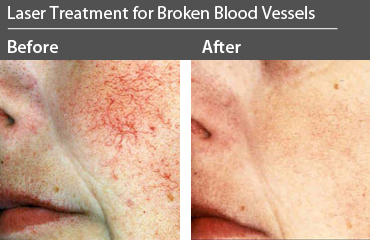
Laser therapy (pulsed dye laser)
Laser treatment can target visible blood vessels by delivering focused light energy to the affected area. Pulsed dye laser (PDL) therapy is one option dermatologists may use for facial blood vessels.
Laser procedures may require more than one treatment, depending on the size and number of blood vessels being treated. Some patients describe the sensation as similar to a rubber band snapping. Ice or other measures may be used to improve comfort.
Temporary redness, swelling, bruising or crusting may occur after treatment. Your dermatologist can explain what to expect based on the specific laser and treatment area.
Intense pulsed light (IPL)
IPL uses broad-spectrum light rather than a laser. It can target redness and visible blood vessels and may be recommended for some patients with facial redness or sun-related skin changes.
Like laser treatment, IPL may require multiple sessions. Your dermatologist can determine whether IPL is appropriate based on your skin type, concerns and treatment goals.
Dr. Fox says, “When I show prospective laser treatment patients before-and-after photos from others we’ve treated for broken blood vessels, they can’t believe the difference and are thrilled for the chance to regain their natural beauty. The patients are impressed to see the improvement in their condition, sometimes after a single short treatment.”
Sclerotherapy for facial veins
Sclerotherapy uses an injected solution to treat certain visible veins. While it is commonly used for spider veins on the legs, other vein treatments may be considered for visible facial veins in selected cases.
A dermatologist can determine whether sclerotherapy or another treatment is appropriate for the location and type of blood vessel.
Topical treatments and skin care
Creams and other topical products generally cannot remove visible broken blood vessels. However, gentle skin care and daily sunscreen can help protect the skin and may be especially important for people with rosacea or sensitive skin.
Makeup or self-tanning lotion can also help conceal or camouflage broken blood vessels, but these products do not remove them.
Can you prevent broken blood vessels?
You may not be able to prevent every broken blood vessel, particularly when genetics or aging plays a role. However, protecting your skin may help reduce contributing factors.
- Use a broad-spectrum sunscreen with SPF 30 or higher every day
- Limit prolonged sun exposure and seek shade when possible
- Wash your face gently with lukewarm rather than hot water
- Avoid harsh skin care products that irritate your skin
- If you have rosacea, work with a dermatologist to manage your symptoms and identify potential triggers
When to see a dermatologist
If broken blood vessels on your face are bothering you or you have persistent facial redness, a dermatologist can help determine what is causing the visible vessels and which treatment may be appropriate.
A dermatologist can also distinguish broken blood vessels from other causes of facial redness or changes in skin appearance. Board-certified dermatologists can evaluate your skin and discuss options such as laser or light-based treatment when appropriate.
Frequently asked questions
Do broken blood vessels go away on their own?
Broken blood vessels generally do not disappear on their own. If they bother you, a dermatologist can discuss treatment options that may reduce their appearance.
Is laser treatment for broken blood vessels painful?
Laser treatment may cause a snapping or stinging sensation. Some patients compare the feeling to a rubber band snapping against the skin. Cooling or other comfort measures may be used during treatment.
How many laser sessions are needed?
The number of treatments varies based on the size and number of blood vessels, their location and the type of laser used. Some smaller vessels may improve after one treatment, while others may require multiple sessions.
Can broken blood vessels come back after treatment?
Treatment can reduce the appearance of existing broken blood vessels, but new vessels may develop over time. Sun protection and management of conditions such as rosacea may help reduce contributing factors.tion as similar to that of a snapping rubber band, topical anesthesia or ice can be applied before treatment to maximize comfort. Larger veins may require multiple laser treatments spaced weeks apart, while small vessels can usually be taken care of with a single, 10- to 15-minute treatment. Bruising, crusting or redness of the skin may occur in some cases, but typically clears within a few days.