
Treatments for Acne
What is Acne?
Acne is a disease that is manifested by chronic inflammation of the hair follicles and oil glands in/on the face, chest, and back that affects almost all males and females during puberty. Acne may present as comedones (whiteheads & blackheads), papules, nodules, cysts or papulopustules.
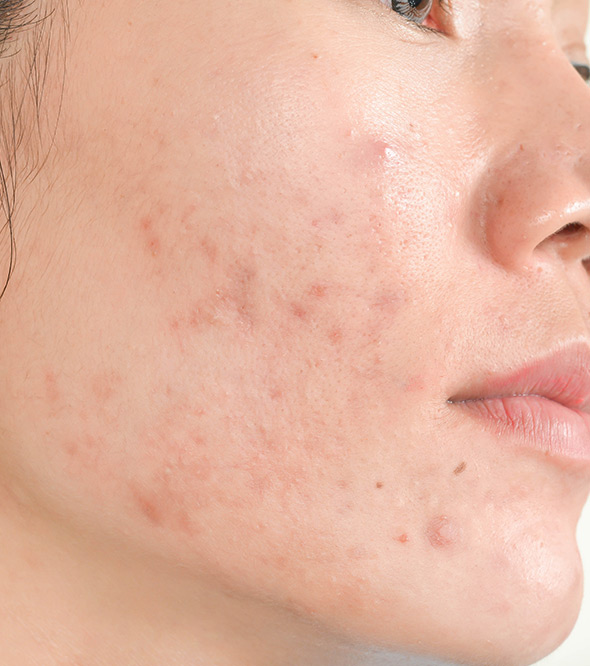
What Causes Acne?
There are numerous factors that contribute to acne. One of which is an increase in androgens, male sex hormones. These hormones are typically found during puberty in both boys and girls, when there is an increase in hormonal activity. These hormones cause the sebaceous gland to enlarge and produce more sebum, promoting acne. Acne is also prevalent in pregnant and menstruating women due to hormonal changes in their body. Birth control pills may help control the level of hormonal activity.
Studies have shown that many teenagers with acne problems have a family history of acne. Additionally, drugs such as androgens and lithium are shown to increase acne. Some cosmetic products make the skin and hair follicles clump together, which create a skin plug, promoting acne in those areas.
Factors that can promote an acne flare include:
- Changing hormone levels in adolescents and adult women
- Oil from skin care products (moisturizers or cosmetics) or grease encountered in the work environment
- Friction and pressure from sports helmets or equipment, backpacks, tight collars, or tight sports uniforms
- Squeezing or picking at blemishes
- Hard scrubbing of the skin
- Stress. (e.g. Less sleep, anxiety, schooling, tests, relationships etc)
How is Acne treated?
We offer various treatments (depending on the severity of the acne) in our offices across Queens, Long Island and Bergen County. For mild acne, many dermatologists might recommend an over-the-counter prescription or topical medication applied directly to the affected areas. These areas can be small or they can cover large areas of a person’s skin. The most common ones include:
- Benzoyl Peroxide – Helps lessen P. acnes, which can reduce oil production
- Resorcinol or Sulfur –Can help reduce blackheads and whiteheads
- Salicylic Acid – Reduces blackheads and whiteheads and helps cut down on the shedding of cells lining the hair follicles
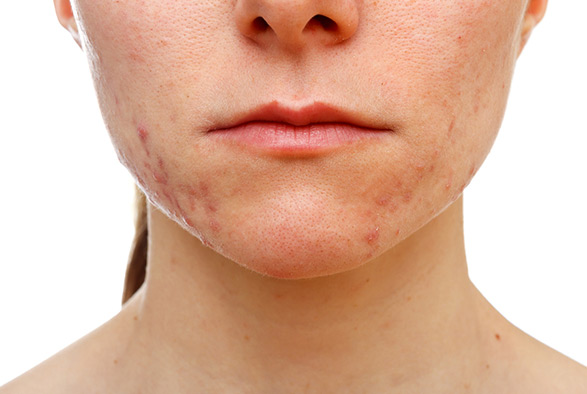
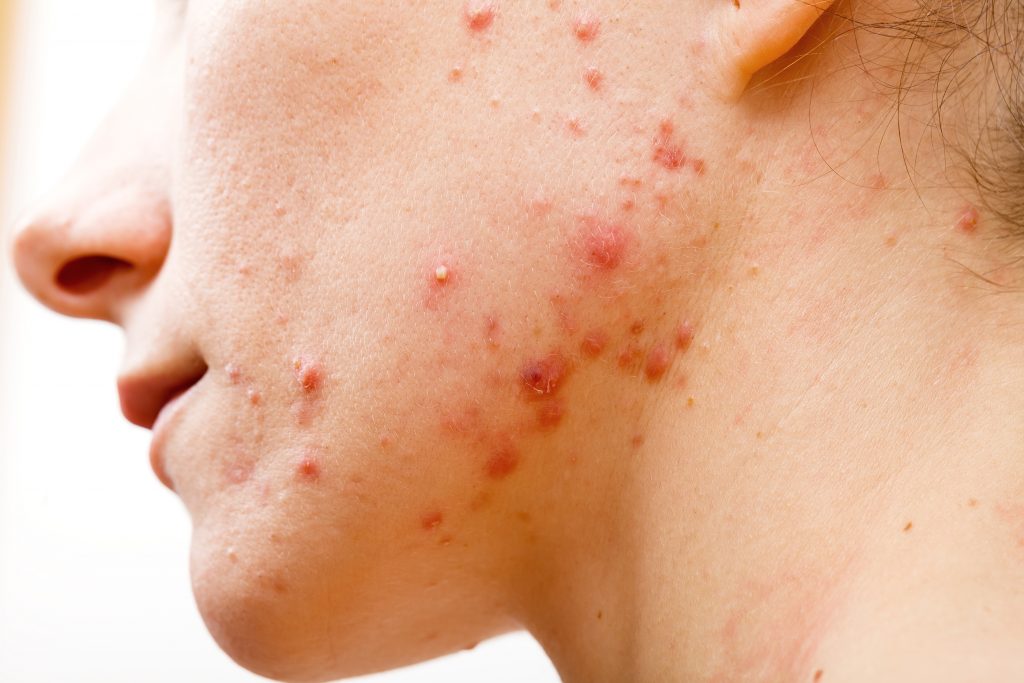
Topical medications come in many forms: solutions, creams, lotions, gels, foams, soaps, cleansers, pledgets and pads. Some of these topical medications may cause side effects such as burning, skin irritation, or redness. These side effects often improve or disappear with continued use of the medicine under your dermatologist’s guidance. If there are severe side effects, you should inform your dermatologist.
Several types of prescription topical medicines are used to treat acne. They include:
- Antibiotics – Slow or stop the growth of bacteria and reduce inflammation (and may reduce the formation of comedones).
- Vitamin A derivatives (retinoids) – These vitamins are typically used to unclog existing comedones (plural of comedo) to allow other topical medications to enter the follicles
- Others – Included are Benzoyl Peroxide prescription strength along with any product containing sodium sulfacetamide/sulfur, Azelaic acid (Azelex), topical dapsone, and topical antibiotics including erythromycin, clindamycin and dapsone – which has additional properties.
Your dermatologist or Physician’s Assistant (specializing in acne) can remove a patient’s comedones and other lesions during your visit. This is called acne surgery. Your dermatologist can also inject corticosteroids directly into affected areas to help rapidly reduce the size and pain of inflamed cysts and nodules. This is helpful for brides, proms, parties, or special occasions for best results.
Can Infants Get Acne?
Male babies in particular have a greater chance due to high levels of the male hormone androgen. These hormones produce oil while the baby’s oil glands are immature and not fully developed which may lead to the growth of bacteria and to the development of acne. The acne, known as prenatal acne, will develop as red pimples and whiteheads on the cheeks and nose usually in the first few weeks after birth. As time goes on, the androgen levels decline and the acne usually goes away. If it persists, a doctor can prescribe the appropriate anti-acne medication.
For more information, please visit our offices located in Manhattan, Bergen County, Long Island, Queens and more.
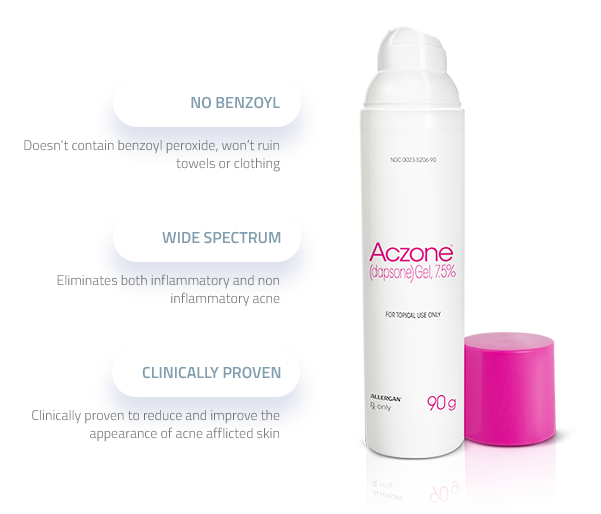
What Aczone Gel is?
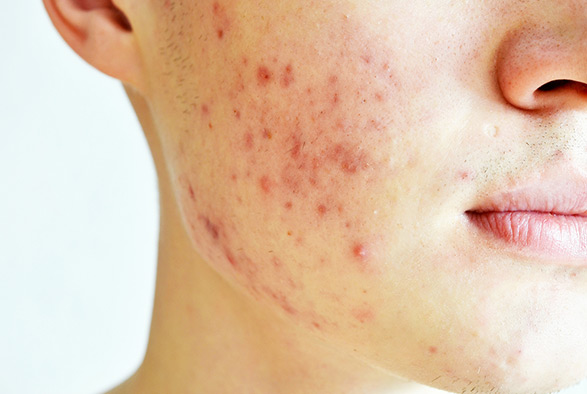
Acne has held you back long enough, now it’s time to take charge of your life and your skin. We’re excited to offer Allergan’s Aczone Dapsone Gel, 7.5% for individuals aged 12 and older looking forward to a clearer future. The gel is meant to help you maintain a consistent skin care regimen and can be prescribed by your dermatologist after a thorough assessment.
The topical formulation is a once or twice a day treatment which fights acne at its source. Being afflicted with acne may seem like a life sentence, but we have a strategy which makes breakouts seem like a thing of the past. The truth is, acne is preventable and we can reduce your symptoms with the correct treatment plan.
Frequently Asked Questions
What is the best way to get rid of acne?
Treating acne is case-specific, with different people responding distinctly to the same medications and treatment plans. Because each patient has his or her own set of sensitivities, figuring out which acne treatment works best for you may be through trial-and-error. There is no “best” solution or one-size-fits-all treatment. At Advanced Dermatology, with multiple locations in New York and New Jersey, our skin care experts will assess the root cause of your acne. Whether your acne is triggered by hormonal changes or imbalances, lifestyle, skin type, or medication, our highly trained dermatologists will help you understand the cause and suggest an effective treatment plan.
Is there anything I can do to prevent acne?
Though acne is not always preventable (it is often genetic), the following are some at-home tips for patients suffering from acne:
- Wash your face with a gentle cleanser in the morning, at night, and anytime you feel sweaty. Be gentle with your skin, as scrubbing too hard can cause irritation.
- Try not to touch your face. Your hands carry countless germs and touching your acne will undoubtedly worsen it. Resist the urge to pick at or pop your pimples.
- Change your pillowcases and sheets more often to prevent the accumulation of dead skin cells and dirt that can occur in bedding.
Why choose Advanced Dermatology?
At Advanced Dermatology, we understand that waiting for acne to clear can be frustrating, and that patients want immediate results so as to start living their lives free of the insecurities that accompany facial acne. Our teams of experienced dermatologists and specialized physician assistants in New York and New Jersey have extensive experience and will work with you until they find a solution that is effective. With 35 locations across Long Island, Manhattan, Brooklyn and Queens, we are always close by. We offer personalized acne care regimens to give you long-lasting results. Make an appointment at one of our convenient NY or NJ locations and start feeling confident about your skin.
What are acne scars?
Acne scars are marks left behind on the skin after your acne has healed. Acne scarring can range from superficial discoloration at the epidermis level, to deeper scarring and pitting at the dermis level. While the discoloration may fade over time, the deeper scarring is often permanent. Acne scarring is very common and affects people of all ages; many people get discouraged from their goal of clear, beautiful skin because of acne scars years after their acne has cleared up.
What causes acne scars?
Acne not only mars the skin, it can also leave behind scarring which sometimes remains for many months, if not years, after the acne itself has been treated. The bacterium that causes acne triggers an immune response from the body; the resulting inflammation can leave behind discoloration called macules. Patients who picked at their pimples or acne that healed improperly can also traumatize the tissue, leaving behind pits and scars. Hereditary factors make some people more prone to acne scarring than others.
Can acne scars be treated at home?
In the case of easy to treat macules, over-the-counter lightening creams can sometimes be enough to remove the blemishes. For deeper, more stubborn scarring, stronger measures may be necessary. The earlier acne scars are treated, the better the results, so older scars may not respond well to over the counter measures. When at-home and over the counter remedies fail to achieve the desired results, patients are encouraged to come to Advanced Dermatology (now serving Summit New Jersey) for a consultation to see what our experienced dermatologists can do for you.
What methods of treating acne scars can a dermatologist offer me?
There have been many advances in dermatology to treat acne scarring; these treatments should be done by a board certified dermatologist and cannot be done at home. Some of the most effective methods are microdermabrasion, laser resurfacing, and chemical peels. These will help resurface the epidermis layer, removing acne scars. Laser resurfacing even promotes collagen growth from the dermis layer, treating the scarring from within. Even more severe cases may require surgical measures such as skin grafts and tissue fillers. Each case is different, so treatment plans are highly customized to each patient’s skin type and the severity of the scarring. A consultation with our dermatologists at Advanced Dermatology will help determine what treatment plan will best address your concerns. We have many locations throughout the New York and New Jersey area, including in Summit & Ridgewood New Jersey.
Will treating my acne scars really make a difference?
Yes! Patients who treat their acne scars notice a drastic improvement in the look and feel of their skin. Having clear, beautiful skin is a great ego boost and can improve self-confidence. Again, the earlier acne scarring is addressed, the better the results, so please come in for a consultation as soon as possible.