
Irregular brown spots: what they mean, causes, and when to see a dermatologist
Brown spots on skin are common and can develop for many reasons, including sun exposure, aging, hormonal changes and past skin inflammation. Most are harmless, but a new or changing spot can sometimes be a sign of skin cancer.
If you’re unsure what a brown spot means, an Advanced Dermatology, P.C. dermatologist can examine it and determine whether it needs monitoring, treatment or further testing. This guide explains common causes of brown spots, what different types can look like, the ABCDE warning signs of melanoma and when to schedule a skin spot evaluation.
What are irregular brown spots?
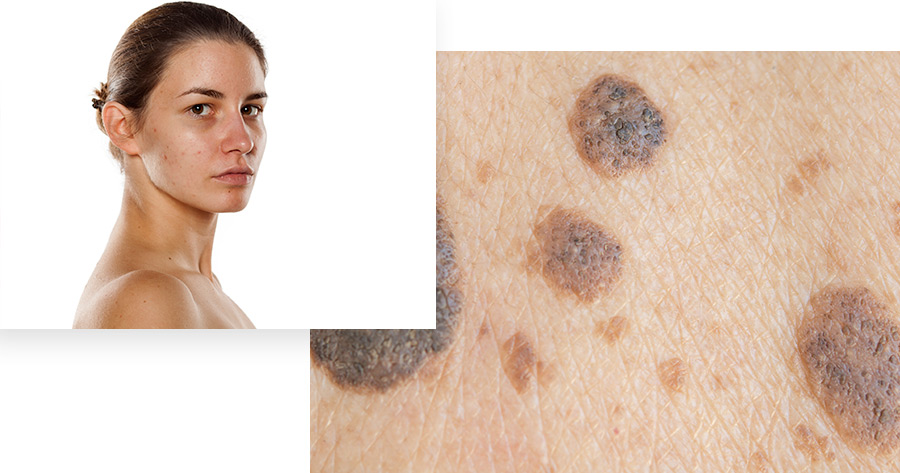
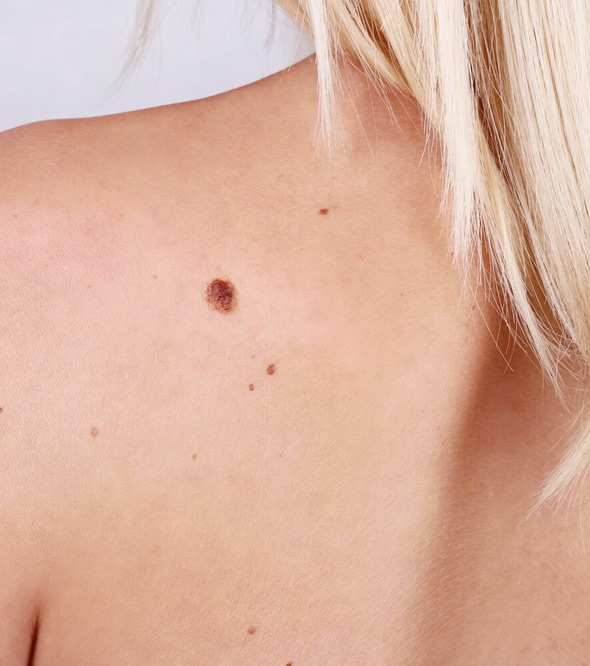
“Irregular brown spots” is a general term for areas of skin that look darker than the surrounding skin. They may be flat or raised and can range from light tan to dark brown or nearly black.
Brown spots can develop because of increased melanin, the pigment that gives skin its color. Other brown spots are benign skin growths that happen to look darker than the surrounding skin. Some moles and skin cancers can also appear brown.
Because different conditions can look alike, you cannot always tell what a spot is by appearance alone. A dermatologist can examine its color, shape, border, texture and other features. A dermoscopic examination or biopsy may be recommended when the diagnosis is uncertain.
Common causes of brown spots
Brown spots can have several causes. Common factors include:
- Sun exposure
- Hormonal changes
- Skin inflammation or injury
- Aging
- Genetics
- Certain medications or medical conditions
Sometimes more than one factor contributes. For example, years of sun exposure can lead to age spots, while hormonal changes and sun exposure can contribute to melasma.s is a pigmented lesion with a significant overgrowth of hair affecting primarily males.
Sun exposure
UV exposure is one of the most common causes of increased skin pigmentation. When skin is exposed to ultraviolet radiation, it produces more melanin. Repeated exposure over time can lead to darker areas of skin and other signs of sun damage.
Sun-related brown spots often appear on areas that receive frequent sun exposure, such as the face, hands, shoulders and arms.
Using a broad-spectrum sunscreen with SPF 30 or higher can help protect your skin from additional UV damage. Protective clothing, shade and limiting prolonged sun exposure can provide additional protection.
Hormonal changes
Hormonal changes can contribute to melasma a type of hyperpigmentation that often appears as larger, uneven patches on the face.
Melasma commonly affects the cheeks, forehead, nose or upper lip. Pregnancy, hormonal birth control and other hormonal changes may play a role, while sun exposure can make the discoloration darker.
If you notice new facial discoloration, a dermatologist can determine whether melasma or another type of pigmentation disorder is responsible.
Inflammation or skin injury
Skin inflammation or injury can leave behind darker areas called post-inflammatory hyperpigmentation. This can happen after acne, a rash, burn, scrape or other type of skin irritation.
For example, inflammatory acne can leave dark marks after a breakout heals. Post-inflammatory hyperpigmentation may last for months or longer, depending on the cause and your skin type.
The original inflammation may be gone by the time the discoloration appears, which can make the cause difficult to recognize.
Genetics
Genetics can influence how much melanin your skin produces and how easily you develop certain types of pigmentation. Family history and skin type may also affect your tendency to develop freckles, melasma and other pigment changes.
A dermatologist can help determine the cause of persistent or bothersome discoloration and recommend treatment when appropriate.
Aging
Brown spots become more common with age, particularly on areas that have received years of sun exposure. These spots are often called age spots or solar lentigines.
Solar lentigines are usually flat and well-defined. They can appear tan, brown or darker and are most common on sun-exposed skin.
Not every brown spot that appears with age is an age spot, however. A new or changing spot should be evaluated if it looks unusual or different from your other spots.
Other possible causes
Certain medications, medical conditions and, less commonly, nutritional deficiencies may be associated with changes in skin pigmentation. These causes are more likely to produce widespread or multiple areas of discoloration rather than one isolated brown spot.
If pigmentation develops suddenly, spreads or occurs along with other symptoms, a dermatologist can determine whether additional evaluation is appropriate.
Types of brown spots: a practical guide
Brown spots can look similar even when they have very different causes. Common types include:
- Solar lentigines: Flat, well-defined brown spots that usually develop on areas exposed to the sun.
- Seborrheic keratoses: Benign skin growths that may be brown, raised and waxy or have a “stuck-on” appearance.
- Post-inflammatory hyperpigmentation: Darkened skin that develops after inflammation or injury.
- Melasma: Larger, uneven patches of pigmentation that commonly appear on the face.
- Freckles: Small, flat areas of increased pigmentation that may become more noticeable with sun exposure.
- Dermatofibromas: Firm, benign skin growths that may appear brown or darker than the surrounding skin.
- Moles: Common skin growths that may be brown, black, pink or other colors and can be flat or raised.
Solar lentigines and seborrheic keratoses can sometimes resemble other pigmented lesions. In some cases, a benign-looking brown spot can be difficult to distinguish from malignant melanoma or another skin condition without a professional examination.
If you’re unsure what type of brown spot you have, a dermatologist can examine it rather than relying on an online description or photograph.
What do brown spots look like, and where do they appear?
Brown spots can vary widely in appearance. They may be:
- Flat or raised
- Smooth, rough or waxy
- Light tan, medium brown or very dark
- One consistent color or made up of several shades
- Small and round or larger with an uneven shape
They commonly appear on sun-exposed areas such as the face, hands, shoulders, forearms, chest and upper back. However, skin cancer can develop on areas that receive little or no sun exposure, so it is important to check your skin more broadly.
A spot that looks different from your other spots may deserve closer attention. You can learn more about potential warning signs in our guide to early signs of skin cancer.
When should you see a dermatologist? Use the ABCDE method
The ABCDE method can help you recognize warning signs of melanoma and other concerning pigmented spots. It is a useful self-check, but it does not replace a professional skin evaluation.
A — Asymmetry
One half of the spot does not look like the other half.
B — Border
The edges are uneven, jagged, scalloped, blurry or poorly defined.
C — Color
The spot has multiple colors or develops a new color, such as black, red, blue or white.
D — Diameter
The spot is about 6 millimeters or larger, roughly the size of a pencil eraser. However, melanoma can be smaller than 6 millimeters.
E — Evolving
The spot is changing in size, shape, color or overall appearance.
Evolving is especially important. A spot that is changing should be evaluated even if it does not meet all of the other ABCDE criteria.
You should also see a dermatologist if a spot:
- Bleeds or crusts
- Itches or becomes painful
- Changes quickly
- Looks noticeably different from your other spots
- Is new and unusual for you
Melanoma can be serious but finding it early can improve the chances of successful treatment. The American Cancer Society reports a five-year relative survival rate of greater than 99% for melanoma that is localized when diagnosed. The current figures are based on people diagnosed from 2015 through 2021.
If you notice a new or changing brown spot, don’t assume it is harmless. A dermatologist can help determine what it is.
How Advanced Dermatology, P.C. evaluates suspicious spots
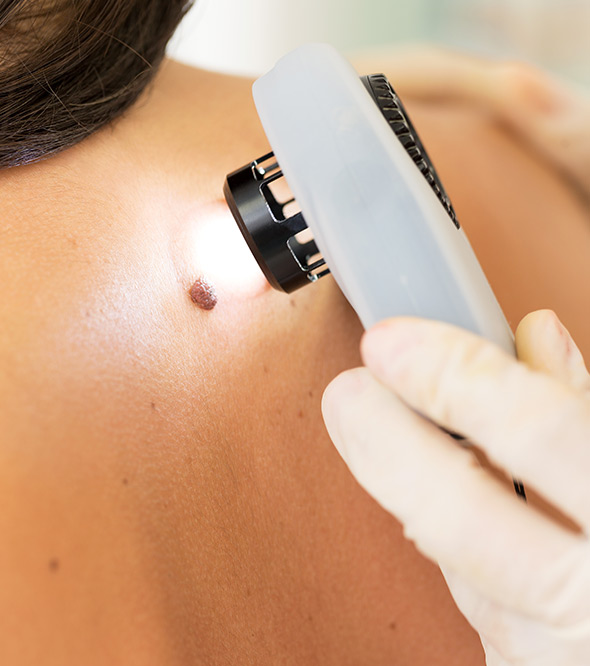
A skin spot evaluation begins with a careful examination of the spot and surrounding skin. Your dermatologist may use a dermoscope, a handheld tool that provides a magnified view of structures and patterns that may not be visible to the naked eye.
Depending on what the dermatologist finds, the next step may be to:
- Monitor the spot for changes
- Treat a known benign condition
- Remove a lesion when appropriate
- Perform a biopsy if the diagnosis is uncertain or skin cancer is suspected
A biopsy involves removing a small sample of skin so it can be examined under a microscope. Your dermatologist can explain why a biopsy is recommended and what to expect.
The goal of an evaluation is not to assume the worst. It is to understand what you’re seeing and determine whether the spot needs treatment, monitoring or additional testing.
How can you prevent brown spots?
You cannot prevent every type of brown spot, but protecting your skin from UV exposure can help reduce sun-related pigmentation and skin damage.
Helpful habits include:
- Use a broad-spectrum sunscreen with SPF 30 or higher.
- Reapply sunscreen about every two hours when outdoors and after swimming or sweating.
- Wear a wide-brimmed hat and UV-protective clothing when appropriate.
- Seek shade when possible, especially during periods of strong sun exposure.
- Avoid tanning beds.
- Check your skin regularly for new or changing spots.
Regular self-checks can help you become familiar with your skin and notice changes. Taking photographs of the areas you want to monitor may also make changes easier to recognize.
If something looks different from what you remember, don’t rely on a photograph or online search to determine what it is. A dermatologist can provide a more reliable evaluation.
Treatment options for brown spots
Treatment depends on what is causing the brown spot. A new, changing or suspicious spot should be evaluated before cosmetic treatment is considered.
For harmless pigmentation, treatment may focus on reducing excess pigment or improving uneven skin tone. Options can include topical medications and in-office procedures. Treatment for a benign raised lesion may be different from treatment for flat pigmentation.
Topical treatments
Depending on the cause, a dermatologist may recommend a topical treatment. Ingredients such as niacinamide, vitamin C or other pigment-targeting medications may help improve some forms of hyperpigmentation.
Results vary based on the cause and depth of the pigmentation. Some treatments take weeks or months to produce noticeable improvement, and sun protection remains important throughout treatment.
Chemical peels
Chemical peels use a chemical solution to remove damaged outer layers of skin. Depending on the type and depth of the peel, a chemical peel may help improve certain types of pigmentation and uneven skin tone.
The appropriate peel depends on the condition being treated, your skin type and other factors. Your dermatologist can explain whether a chemical peel is appropriate and what to expect during recovery.
Laser procedures
Certain laser procedures can target excess pigment or improve the appearance of uneven skin. The type of laser and treatment approach depend on the condition being treated and your individual skin characteristics.
Laser treatment is not appropriate for every brown spot. The cause should be determined before treatment so that a potentially suspicious lesion is not treated as a cosmetic concern.
Cryotherapy
Cryotherapy uses liquid nitrogen to freeze certain skin lesions. It may be appropriate for some benign, sun-related lesions.
The treated area may become red, blister or form a scab as it heals. Your dermatologist can explain whether cryotherapy is appropriate for the specific spot being evaluated.
Frequently asked questions
Can irregular brown spots be cancer?
Yes. Some skin cancers, including melanoma, can appear as brown or dark spots. However, many brown spots are benign.
A new, changing or unusual spot should be evaluated rather than diagnosed based on appearance alone.
What is the difference between age spots and melanoma?
Age spots, also called solar lentigines, are usually flat, well-defined areas of tan or brown pigmentation that develop on sun-exposed skin. Melanoma may have an irregular shape, uneven border, multiple colors or other changing features.
Because some pigmented lesions can overlap in appearance, a dermatologist should evaluate a spot that is new, changing or noticeably different from your other spots.
What is the fastest way to fade dark spots?
There is no single treatment that is fastest or best for every type of dark spot. Treatment depends on the cause and may include topical treatments, chemical peels or certain laser procedures.
Before trying to fade an irregular or changing spot, have it evaluated to make sure it is safe to treat.
When should I worry about a brown spot?
Consider having a brown spot evaluated if it is new or changing, especially if you notice:
- Asymmetry
- An uneven or irregular border
- Multiple or changing colors
- Increasing size
- Changes in shape or appearance
- Bleeding, crusting, itching or pain
- A spot that looks different from your other spots
When in doubt, a professional evaluation can provide a clearer answer.
How often should I get a full-body skin check?
There is no single skin-check schedule that is right for everyone. Your dermatologist may recommend routine full-body skin exams based on your personal and family history, previous skin cancers, number and type of moles and other risk factors.
Between professional exams, regular self-checks can help you notice new or changing spots. If you see a concerning change, don’t wait for your next routine exam to ask about it.
Schedule a skin spot evaluation with Advanced Dermatology, P.C.
Brown spots are common, but a spot that is new, changing or simply does not look right is worth checking. You don’t have to determine what it means on your own.
At Advanced Dermatology, P.C., dermatologists can examine the spot, explain what they find and recommend the next step when needed. The practice currently has 40+ locations in New York and New Jersey, making it easier to find a dermatology office near you.
Schedule an appointment or find a provider to take the next step toward understanding your skin.