
Vitiligo: Causes, Symptoms and Treatment Options
Discovering unexpected patches of lighter skin can leave you feeling confused, self-conscious or even worried about what’s happening to your body. You’re not alone. Vitiligo affects around 70 million people worldwide, according to data from the Global Vitiligo Foundation. This condition causes certain areas of skin to gradually lose their natural pigment.
At Advanced Dermatology, P.C., our team of experienced specialists uses the latest medical knowledge to help patients understand why vitiligo develops, recognize early symptoms and navigate effective treatment options. Our medical and cosmetic dermatology expertise ensures you receive the best possible guidance for restoring both skin health and personal confidence.

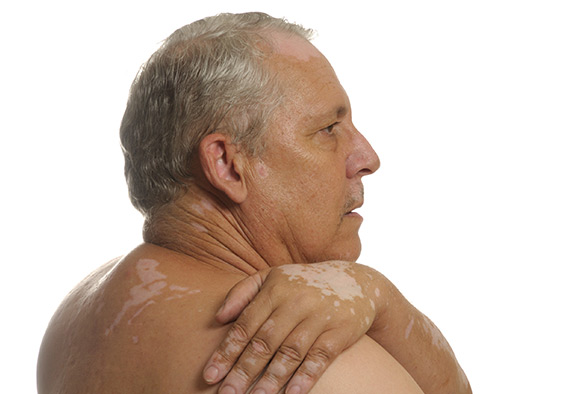
What is vitiligo?
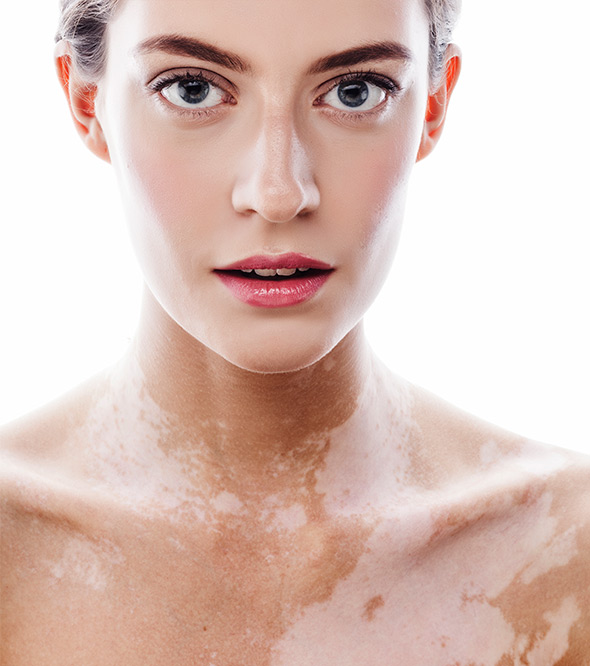
The skin gets its color from a substance called Melanin. Vitiligo is a condition that develops when the melanin-producing cells die or no longer produce melanin. This causes white patches or pigment-free patches of random shapes and patterns to appear on the skin’s surface.
While vitiligo can affect anyone, it is more noticeable in people with darker skin. Vitiligo usually starts as small areas of pigment loss. These areas of white patches slowly grow and spread over time.
Types of vitiligo
Vitiligo can present with varying patterns and areas of pigment loss. Recognizing these differences is important for dermatologists to develop effective, personalized treatment plans tailored to each person’s needs.
Non-segmental (generalized) vitiligo
This form of vitiligo is the most common type of vitiligo in which pigment loss is widespread throughout the body, often presenting in symmetrical patterns.
Segmental vitiligo
In segmental vitiligo, loss of skin color only occurs on one side of your body. This form of the condition tends to occur at a younger age and progresses for a year or two and then stops.
Focal
In this form of vitiligo, pigment is lost from a few isolated areas of the body.
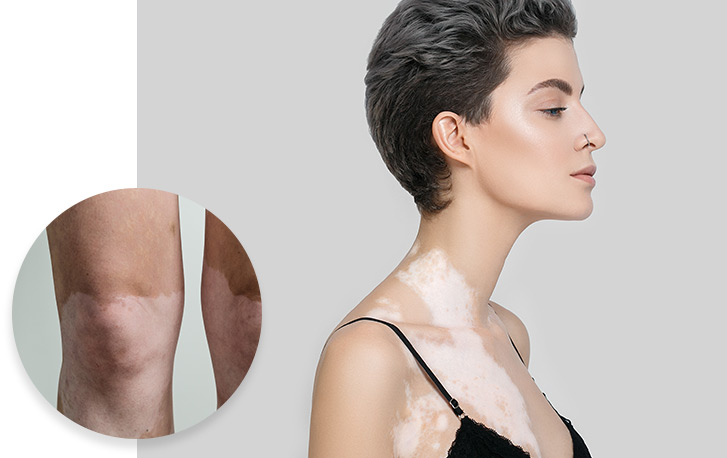
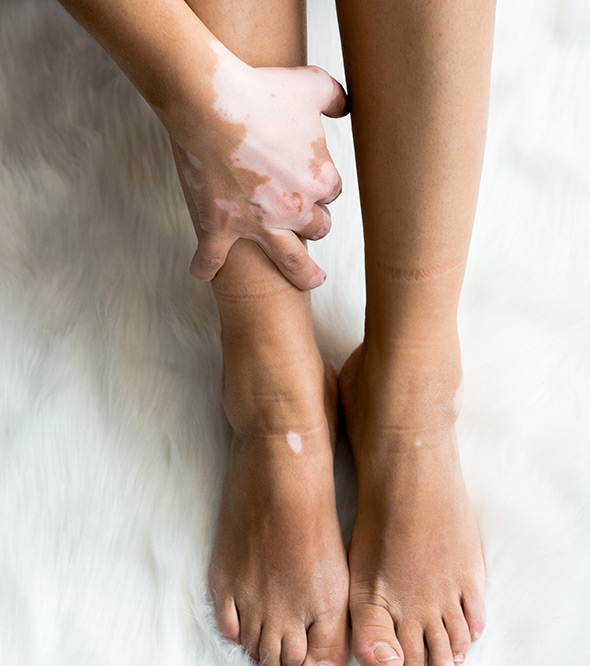
Symptoms of vitiligo
The main symptom of vitiligo is the disappearance of skin pigment and the appearance of white patches throughout the body. Less common symptoms may include graying of the hair (scalp, eyelashes, eyebrows) and loss or change of color of the retina (inner layer of the eye).
Vitiligo generally presents on areas of the body that are exposed to the sun; the face, hands and arms are typically the most affected. However, the condition can and often does extend to areas of the body that generally do not receive any sun exposure, such as the genital region.
What causes vitiligo?
There are many theories on what causes vitiligo. The generally accepted theory is that vitiligo is a type of autoimmune disorder. An autoimmune disorder is when the body “attacks itself.”
For vitiligo, it is believed that the body’s immune system sees the pigment cells in the skin as foreign or as something that endangers the body and therefore attacks them in an attempt to destroy the pigmented cells. This is thought to be a genetic condition.
Currently, there is no cure available for those with vitiligo. Treatment is intended to slow the progression of pigment loss and, if desired, to restore pigment.
How vitiligo differs from other conditions with white patches
Several skin conditions can be mistaken for vitiligo due to similarities in appearance. Accurate diagnosis by a dermatologist is important, as each condition requires a different treatment approach.
Tinea versicolor
Tinea versicolor, a common fungal infection, can cause pale or discolored spots that may look like vitiligo but are usually accompanied by mild scaling. Key differences include the following:
- Caused by an overgrowth of the naturally occurring Malassezia yeast on the skin
- Most common in highly humid tropical regions, affecting up to 50% of people living in those conditions
- Depigmentation resulting from fungal interference with pigmentation
- Patches can be scaly or itchy
Post-Inflammatory hypopigmentation (PIH)
PIH hypopigmentation is a condition where pigmentation changes occur. However, it is distinct from vitiligo in that the pigmentation loss occurs only after inflammation or injury.
Scleroderma
Scleroderma sometimes presents with lighter patches that resemble vitiligo, but it is a connective tissue disorder with additional symptoms such as skin thickening. Other differences include the following:
- Raynaud’s phenomenon, a condition that causes spasming in the fingers and toes and skin discoloration.
- Changes in mobility caused by tightened skin.
- Changes in organ function, like shortness of breath and acid reflux.
Since these conditions can appear similar, only a board-certified dermatologist can reliably diagnose and recommend proper treatment.
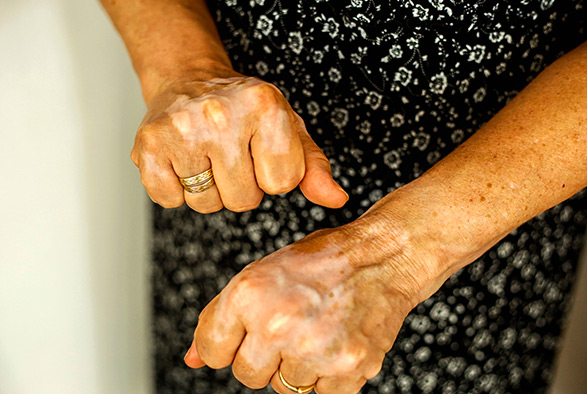
Treatment options for vitiligo
While Vitiligo is difficult to treat, several therapies have been developed to help people with this condition.
Topical corticosteroids and calcineurin inhibitors
Corticosteroids (steroid creams) work to restore pigment in the skin. This form of treatment is the safest therapy for vitiligo, but not necessarily the most effective. The best results occur when the cream is applied in the early stages of the disease.
When using a corticosteroid topical ointment, one will have to apply the cream to the white patches on the skin for at least three months before recognizing results. Side effects from the use of such steroids may result in skin atrophy or shrinking, and the appearance of streaks and lines (striations) in the skin.
Topical ointments containing tacrolimus or pimecrolimus are effective for people with small areas of depigmentation, especially on the face and neck. These drugs are immunosuppressants. This treatment may have fewer side effects than corticosteroids and can be used in combination with ultraviolet B (UVB) treatments.
Phototherapy (narrowband UVB)
Narrowband ultraviolet B (NB-UVB) therapy is a widely used treatment for vitiligo that exposes affected skin to specific wavelengths of UV light. This method helps slow down melanin loss in depigmented areas.
NB-UVB therapy works by stimulating melanocyte cells, which are responsible for producing melanin, the pigment that gives skin its color. This stimulation encourages pigment restoration and helps achieve a natural, even skin tone.
Newer topical options (JAK inhibitors – Opzelura)
Research published in the Journal of the American Academy of Dermatology has highlighted the effectiveness of JAK inhibitors in the treatment of vitiligo. Ruxolitinib cream (Opzelura) is the first topical JAK inhibitor therapy specifically approved for vitiligo, providing a new, evidence-based option for patients.
This new therapy marks a significant advancement over existing treatments. Unlike corticosteroids and tacrolimus, ruxolitinib cream specifically targets the inflammatory processes and melanocyte destruction central to vitiligo, resulting in more effective management. Ruxolitinib cream also offers a promising long-term safety profile, minimizing the risks associated with systemic oral therapies or local side effects of corticosteroids. Clinical trials have demonstrated sustained repigmentation rates, especially when used alongside narrowband ultraviolet-B or in patients previously unresponsive to other topical agents

Frequently asked questions
Is vitiligo an autoimmune disease?
Yes, vitiligo is considered an autoimmune condition. The immune system mistakenly attacks the pigment-producing cells (melanocytes), leading to patches of depigmented skin.
Can vitiligo spread to cover the whole body?
Vitiligo can sometimes spread to larger areas, but the extent varies greatly between individuals. Some people experience only a few patches, while others may notice a wider distribution over time.
Is there a cure for vitiligo?
Currently, there is no cure for vitiligo. However, many effective treatments and management strategies are available. These include topical therapies, light therapy and cosmetic options to help restore skin color or mask affected areas. With proper management, people with vitiligo can achieve significant improvements in appearance and confidence.
Does vitiligo affect life expectancy?
Vitiligo does not affect life expectancy. It is a skin condition and does not negatively impact other organ systems or overall health. People with vitiligo can expect to live a normal, healthy life.
Can vitiligo be triggered by stress?
While stress does not cause vitiligo, it can act as a trigger for the onset or worsening of symptoms in individuals who are predisposed. Managing stress may help reduce flare-ups, but it is not the root cause of the condition.

Book a vitiligo consultation at Advanced Dermatology, P.C.
Take control of your vitiligo with personalized treatment planning from our expert dermatologists. With over 40 locations throughout New York and New Jersey, Advanced Dermatology, P.C. makes care accessible and convenient.
Book online today to schedule your vitiligo consultation and begin your journey to healthier skin.