
What to expect before, during and after Mohs surgery
Medical Review by: Mahir Patel, M.D Last Reviewed: October 2026
Mohs skin cancer surgery is a precise technique used to treat skin cancer by cutting away thin layers of skin until no malignancy remains.
The American Society of Mohs Surgery notes that this targeted procedure achieves a 99% cure rate for first-time skin cancers. Understanding Mohs surgery and what to expect involves tracking three distinct phases: comprehensive preparation, the step-by-step clinical procedure, and precise long-term recovery.
Disclaimer: The information on this page is for educational purposes only and should not replace a professional medical consultation.
What is Mohs surgery?
The Centers for Disease Control and Prevention reports that skin cancer is the most common form of cancer in the United States.
Because of this high prevalence, finding an advanced treatment that eliminates malignant cells while preserving healthy tissue is essential. Mohs surgery is an exceptionally precise clinical technique designed for removing skin cancer one thin layer at a time.
Mohs surgeons utilize the micrographic technique for high-risk areas because it allows them to verify that all cancer is gone before completing the session. This rigorous, layer-by-layer verification is why first-time skin cancer cases achieve an outstanding cure rate of 98% to 99%.
Before Mohs surgery — how to prepare
Reviewing the core requirements of Mohs surgery preparation ahead of time helps ensure a smooth, low-stress experience on your surgery day. Our board-certified dermatologists will coordinate with you directly to send a comprehensive list of personalized pre-operative clinical instructions.
Medications to discuss with your doctor
Provide a complete list of every prescription, over-the-counter medicine, and herbal supplement you take before your procedure. Some options can increase bleeding risk and must be paused under the guidance of a dermatologist, with common examples including aspirin, ibuprofen, fish oil, and vitamin E.
What to bring and wear on surgery day
Wear loose, casual clothing layered to help you stay comfortable if the temperature shifts. Because you will stay on-site between evaluation stages, feel free to bring headphones, a book, or another preferred activity to pass the time comfortably.
You’ll also need a friend or family member to drive you home after the procedure – we strongly recommend against driving yourself home, so it’s worth arranging that ahead of time.
Setting expectations for the day
Most visits last a few hours from start to finish because the Mohs surgery process moves in precise, meticulous stages. You will rest comfortably in our waiting area while our on-site lab processes each layer of tissue, and our team will update you at every step.
During the procedure — what happens step by step
Understanding what happens during Mohs surgery can help remove any remaining uncertainty about your upcoming appointment. The surgical process relies on immediate, same-day microscopic verification to guarantee complete tumor removal.
Local anesthesia and tissue removal
Before we begin, a board-certified dermatologist numbs the treatment area with a local anesthetic injection so you stay completely comfortable. Once the skin is fully numb, the dermatologist gently removes the visible portion of the tumor along with a very thin layer of tissue underneath it.
Microscopic examination
Every layer of tissue removed goes directly to our in-house laboratory for detailed mapping and microscopic analysis. Your dermatologist examines the tissue margins for cancer cells, and if any malignancy remains, we remove an additional layer from only that exact spot.
Wound closure and reconstruction
Once the margins are confirmed completely cancer-free, your dermatologist will discuss the best technique to close and repair the wound. Depending on the location and size, options range from local stitches to advanced structural skin flaps or grafts designed to minimize Mohs surgery scars.
After Mohs surgery — recovery and healing
Following proper Mohs surgery aftercare guidelines ensures optimal clinical healing and supports the long-term health of your skin. Our board-certified dermatologists stay closely involved throughout the full restoration process to monitor your progress and ensure absolute comfort.
Immediate aftercare (first 24-48 hours)
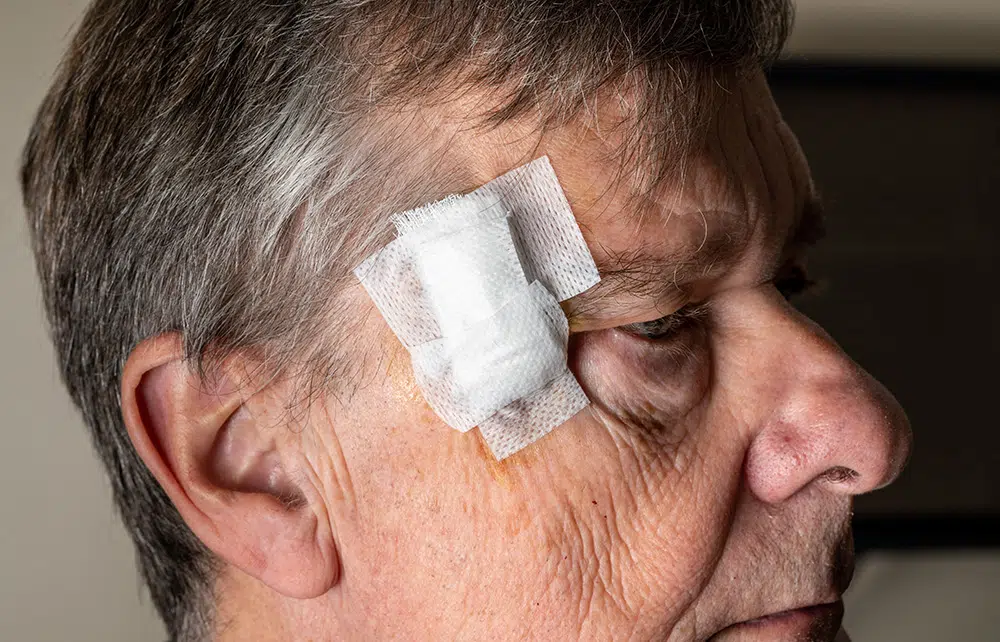
The first day or two after your procedure is mostly about resting and keeping the wound completely clean. Your dermatologist will instruct you on how to apply protective petroleum jelly and change your sterile surgical bandage daily.
Recovery timeline (weeks 1-4)
During the first month of your Mohs surgery recovery timeline, your skin tissue will gradually close and strengthen. It is normal to experience temporary swelling or mild tenderness around the site, and you may slowly ease back into your routine as your comfort level improves.
Long-term scar healing and follow-up
All surgical procedures leavea risk of scarring, but these marks will steadily fade and soften over the course of several months. Consistently practicing daily sun protection and gentle skin care will significantly improve the final cosmetic appearance of the treated area.
Frequently Asked Questions
How long does Mohs surgery take?
Most procedures take less than four hours from start to finish, though our dermatologists advise planning for a longer day just in case extra surgical stages are required. The total time depends entirely on how many thin layers of skin need to be evaluated in our on-site lab to achieve completely clean margins.
Is Mohs surgery painful?
No, you will not feel pain during the surgical extraction because the entire area is thoroughly numbed with a local anesthetic. The skin may feel slightly tender or sore for a few days after the numbing medication wears off, which is easily managed with standard over-the-counter options.
When can I return to normal activities?
Most individuals can return to light daily activities within 24 to 48 hours after surgery, provided they avoid strenuous workouts that strain the stitches. Your dermatologist will give you specific, personalized lifestyle guidelines based on the structural location and size of your surgical wound.
Will Mohs surgery leave a scar?
Yes, some degree of permanent scarring is a natural part of any skin surgery, but our micrographic technique keeps the mark as small as possible. By targeting only the cancerous cells, our specialized dermatologists preserve the maximum amount of healthy tissue to support optimal cosmetic results.
Is Mohs surgery covered by insurance?
Yes, Mohs micrographic surgery is a medically necessary intervention for skin malignancies and is widely covered by most health insurance networks. We highly recommend reviewing your specific policy details or calling your carrier directly before your appointment to confirm your exact plan benefits.
Schedule your Mohs surgery consultation
A skin cancer diagnosis can feel overwhelming, but securing a treatment team you can trust makes the experience much more manageable. Our dedicated, fellowship-trained specialists are here to provide clear answers, advanced on-site laboratory testing, and compassionate clinical care.
Please contact us by phone at (888) 747-5273 or book an appointment online with an expert at a location nearest you.